A Sentence vs Fragment Anchor Chart can be a total game-changer when it comes to teaching students the difference between a complete and an incomplete thought.
You know how it goes — students can tell you that a sentence needs a subject and a predicate, yet somehow you still end up reading things like, “Running through the playground.” (Close, but not quite!)
That’s exactly why I started creating anchor charts to help make complete thoughts visible. Because when students can see what makes a sentence whole, it finally clicks.
.
💬 Let’s Talk About Sentences (and Their Sneaky Cousins — Fragments)
You know those “almost sentences” that show up in student writing?
“Running through the park.”
“With a sandwich.”
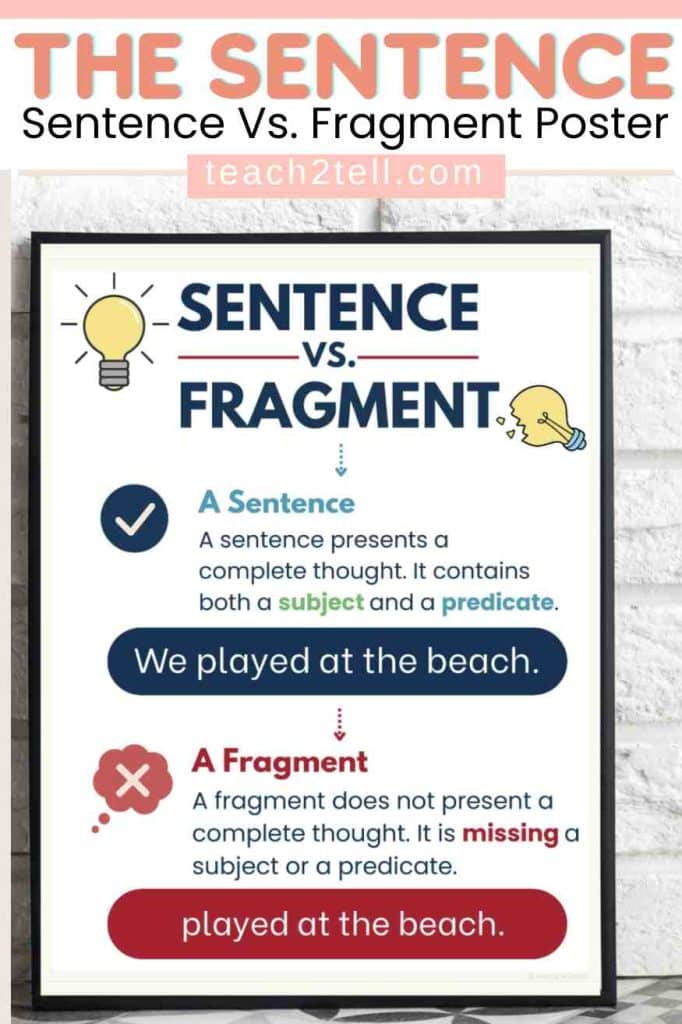
They sound lively, but they’re not quite complete. A Sentence vs. Fragment Anchor Chart helps students notice what’s missing — usually a subject, a predicate, or a full idea that ties it all together.
Once I introduced this visual in my own classroom, I noticed something magical: students began spotting fragments before I did. There’s nothing better than hearing, “Wait — that’s not a full sentence!” from across the room.
✏️ Why Sentence Fragments Are Trickier Than They Look
At first glance, fragments seem easy to teach — they’re just incomplete sentences, right?
But when students confidently tell you that “Because I was late.” is complete, you realize grammar isn’t as simple as it seems.
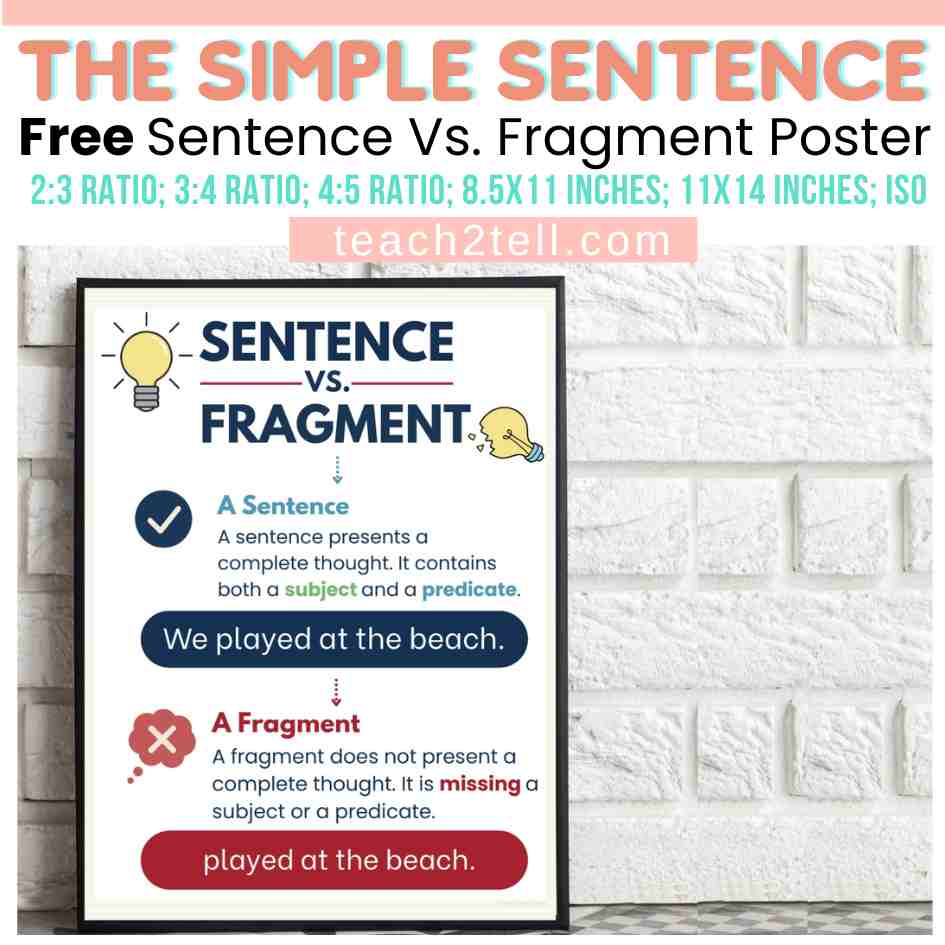
The Sentence vs. Fragment Anchor Chart gives students a way to visualize what’s missing. It breaks down a sentence into the two things it always needs:
-
a subject (who or what it’s about)
-
and a predicate (what’s happening).
Once they see how those two parts work together, grammar lessons start to make sense. Fragments become little puzzles to solve instead of mistakes to fix.
🧠 Anchor Charts to the Rescue
Anchor charts are the quiet heroes of any classroom. Once they’re laminated and up on the wall, they become a reference tool students use all year long.
Here’s how I use my Sentence vs. Fragment Anchor Chart in class:
💡 During mini-lessons: we highlight examples and talk through what’s missing.
🪄 During writing: students glance up to check their sentences — “Does it make sense on its own?”
🧍♀️ During literacy centers: students match fragments to sentences or “fix” incomplete thoughts.
It’s visual, interactive, and keeps grammar simple and consistent without another worksheet in sight.
⚙️ Building Toward Subjects and Predicates
Once students can tell the difference between a sentence and a fragment, it’s time to introduce subjects and predicates.
We start small:
“The dog barked.”
Then build it out:
“The big brown dog barked loudly at the mailman.”
Same idea, just more detail. Students quickly see that sentences aren’t random strings of words — they’re structures with purpose.
I often describe it like this: “A sentence needs two halves — who or what, and what’s happening.” When both are there, it just clicks.
🧩 Teaching the Complete Subject
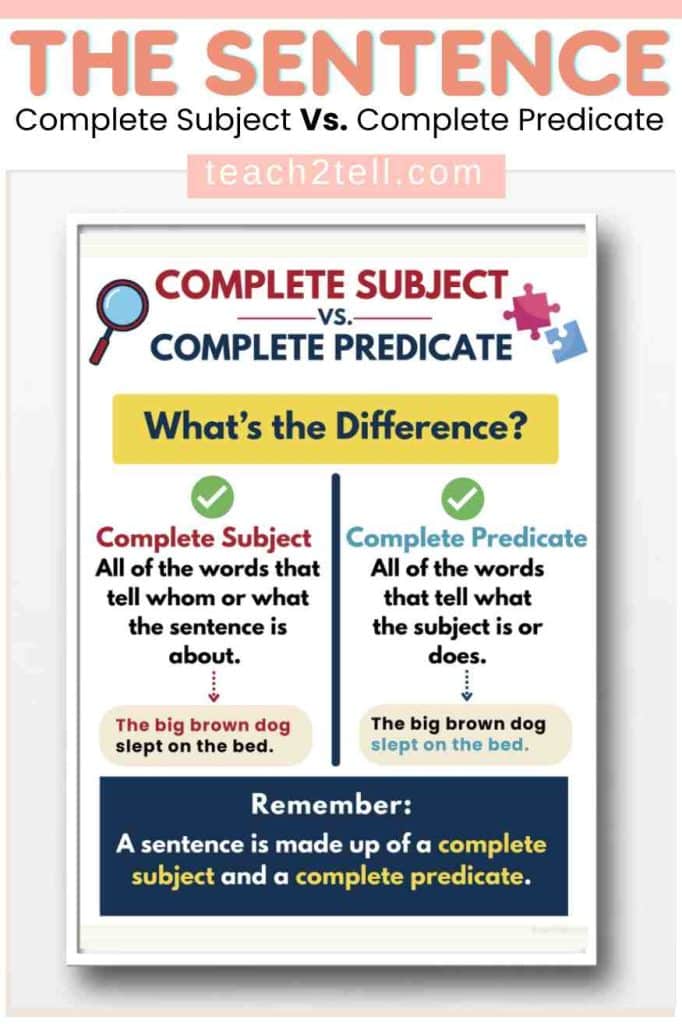
A complete subject includes all the words that tell who or what the sentence is about.
Example:
“The friendly golden retriever next door” loves belly rubs.
Everything before loves belly rubs is the complete subject.
I’ll often say, “If you can spotlight who or what this sentence is about, that’s your complete subject.” Students enjoy testing this idea with funny examples — “The grumpy teacher with coffee stains on her shirt” usually gets a laugh (and yes, that teacher is me before morning recess).
The Complete Subject Poster makes this visible — it turns an abstract grammar idea into something students can point to and understand.

⚙️ Teaching the Complete Predicate
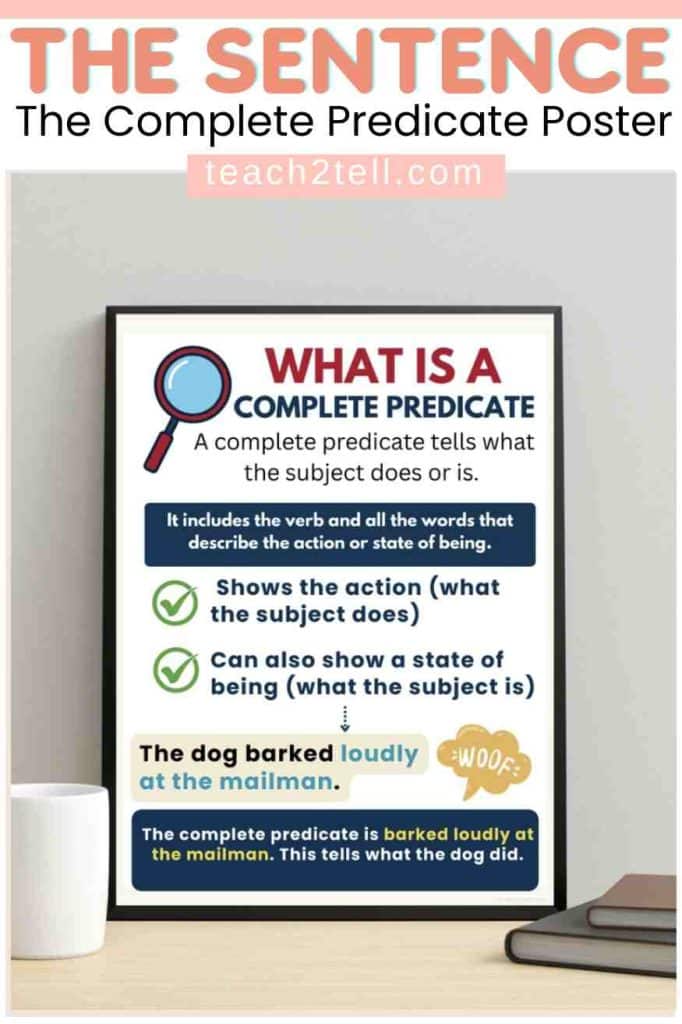
A complete predicate tells what the subject does or is. It’s the part that carries the action or description.
Example:
The friendly golden retriever next door loves belly rubs and naps in the sun.
When I introduce the Complete Predicate Poster, we talk about how it’s not just the verb — it’s the entire part that tells us more about the subject.
I explain it like this: “The predicate tells what your subject is doing or being. If you stop too early, your reader will be waiting for more. When you finish the idea, you’ve got a full, satisfying sentence.”
⚖️ Complete Subject vs. Complete Predicate
Once both parts are clear, we bring them together — like two sides of the same puzzle.
Our Complete Subject vs. Complete Predicate Poster shows this balance perfectly. Students love using mini whiteboards to divide their own sentences into two parts — one for the complete subject, one for the complete predicate.
I tell them, “A sentence works like a seesaw — both sides need to be there, or it just doesn’t move.”
That visual sticks with them every time.
🪶 Simple Subject vs. Simple Predicate
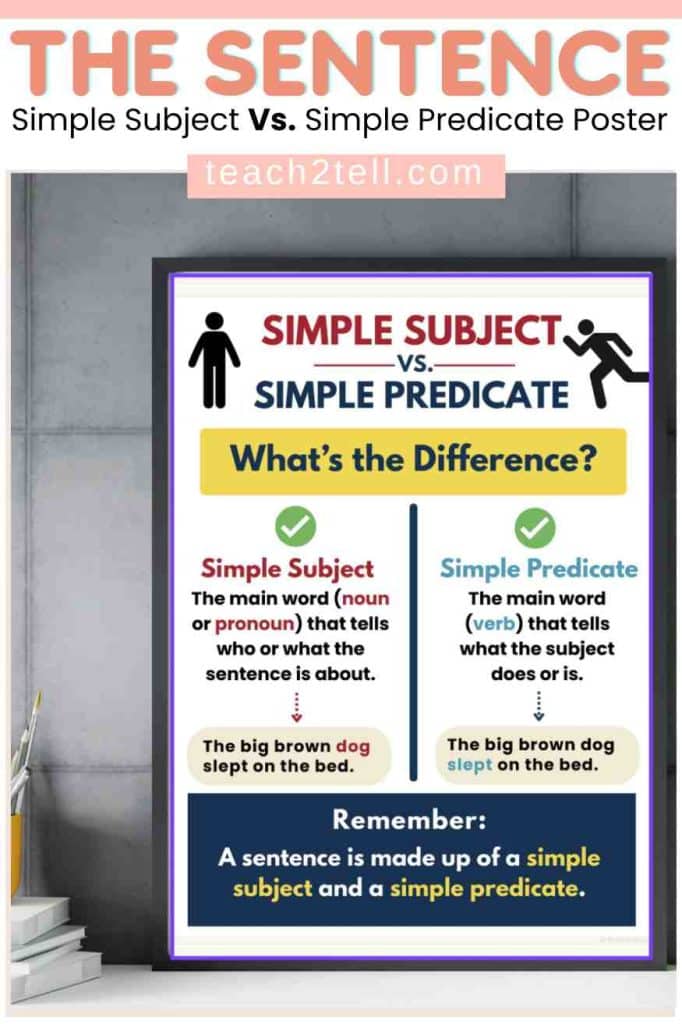
Once students have the basics, we zoom in even closer to the core of the sentence — the simple subject (main noun) and simple predicate (main verb).
Example:
The friendly golden retriever next door loves belly rubs.
Here, “retriever” is the simple subject, and “loves” is the simple predicate.
With the Simple Subject vs. Simple Predicate Poster, students can quickly spot the essentials. We even turn it into a mini “Sentence Surgery” activity — trimming away extra words until only the heart of the sentence remains.
It’s hands-on, a little messy, but always memorable.
📚 The Sentence vs. Fragment Anchor Chart Free Poster
Because grammar is best seen as well as taught, you can grab this free Sentence vs. Fragment Anchor Chart Poster below.
It’s clean, visual, and classroom-ready — perfect for grammar walls, writing lessons, or literacy centers.
You can print it in 23 different sizes using high-resolution JPGs and PDFs for flexible printing.
🔽👇
DOWNLOAD YOUR FREE SENTENCE VS. FRAGMENT POSTER HERE! 👇
🌟 Keep Exploring
If your students enjoyed working with the Sentence vs. Fragment Anchor Chart, they’ll love building on it with this next step — learning about Complete Subjects and Predicates through a fun, hands-on activity.
👉 Read: Complete Subject and Complete Predicate Hands-On Activity
This post on “Free Sentence vs Fragment Anchor Chart” originally appeared at TEACH2TELL.COM


Leave a Reply