Teach Kids to Spot Poisonous Plants with These Free Task Cards!
How it started…
Yikes! My mom is a volunteer ranger at our local State Park, and you wouldn’t believe how unprepared the kids come for nature field trips out into the woods! No sunscreen, no water bottle, wandering off the path, but the worst is that they have zero basic knowledge of the world outdoors! If it wasn’t on Animal Planet, they don’t have any background in it whatsoever. After hearing story after story about allergic reactions, sunburns, and poison ivy, I decided to put something together that they could keep at the nature center. Ultimately, it turned into a TPT freebie that I hope you’ll enjoy!
How is it going…
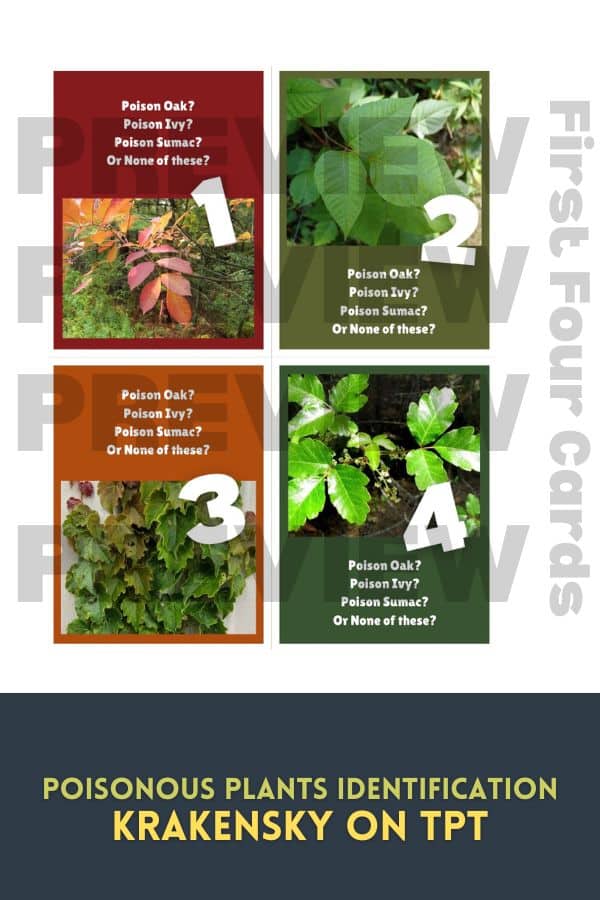
Looking for an easy, classroom-ready way to teach your students about poisonous plants? I’ve got a freebie you’ll love! These Poisonous Plant Identification Task Cards make it super simple to introduce plant safety without any extra prep!
This little set covers some of the most common “uh-oh” plants kids might run into—like poison ivy, poison oak, and poison sumac. The cards use real photos and kid-friendly questions to help students learn what to look for before heading outdoors.

What’s Inside the Freebie
You’ll get:
- 10 full-color task cards with authentic plant images
- Both PDF and JPG versions for flexible printing
- Answer key to make your life easier
Perfect for grades 3–8, but honestly, younger kids love looking closely at plant photos too!
Easy Ways to Use Them
No need to reinvent the wheel—here are quick ideas you can use tomorrow:
- Science centers: Let students rotate through the cards and discuss what they notice.
- Outdoor learning: Take the cards outside and compare them to safe plants on campus.
- Health & safety lessons: Start a conversation about staying safe on hikes, playgrounds, and backyards.
- Small groups: Use a few cards at a time for warm-ups or quick review.
They’re also great if you teach ecosystems, plant adaptations, or survival skills.

A Sneaky Way to Hit Standards
Even though these cards feel simple and fun, they connect beautifully with NGSS topics like structures that help plants survive, interactions in ecosystems, and using evidence to explain ideas. They also support close-reading and observation skills. Win-win!
Why This Lesson Matters
Kids love exploring nature—but they’re not always great at spotting the plants that aren’t so friendly. Giving them a visual guide helps build confidence, curiosity, and safe habits. These cards make that conversation easy, approachable, and hands-on.
🌿Just so you know…🌿 Supports NGSS-aligned life science learning while reinforcing literacy and critical thinking skills through real-world plant identification and safety awareness.
💬 I’d Love to Hear From You!
If you use this freebie, let me know how it goes! Or better yet, tag me in your social media post @creativebrainsgrowhere!
Your feedback helps me create even more tools to support your learners!
Thank you, and have a fantastic week!
-J

Leave a Reply