Me again! New freebie drop!
Are you looking for a low-prep STEM activity that combines science, creativity, and environmental awareness? This FREE Pollinator Habitat STEM Challenge is a great addition to your classroom or homeschool plans.

Parents, too!
Looking for something to keep kids busy without being glued to a screen all day? That’s where printable educational activities come in. They’re easy, low-pressure, and simple to use—no fancy prep, subscriptions, or extra supplies needed.
Printables give kids something fun and purposeful to work on while still feeling relaxed. Whether it’s a science page, a creative activity, a puzzle, or a hands-on STEM challenge, they help fill those long indoor days with curiosity and creativity. For parents, they add just enough structure to the day—without making it feel like you’re running school at home.
Pollinators like bees and butterflies play a vital role in helping plants grow! This hands-on activity allows students to think like engineers AND learn how to protect and support these important creatures.
What Is the Pollinator Habitat STEM Challenge?
In this activity, students are given a real-world problem:
How can we design a safe and helpful habitat for bees and butterflies?
Using simple classroom or recycled materials, students:
- Plan a pollinator habitat
- Design and build a model
- Test their ideas
- Reflect and improve their design
There’s no single right answer, which makes this activity perfect for encouraging creativity, problem-solving, and collaboration!
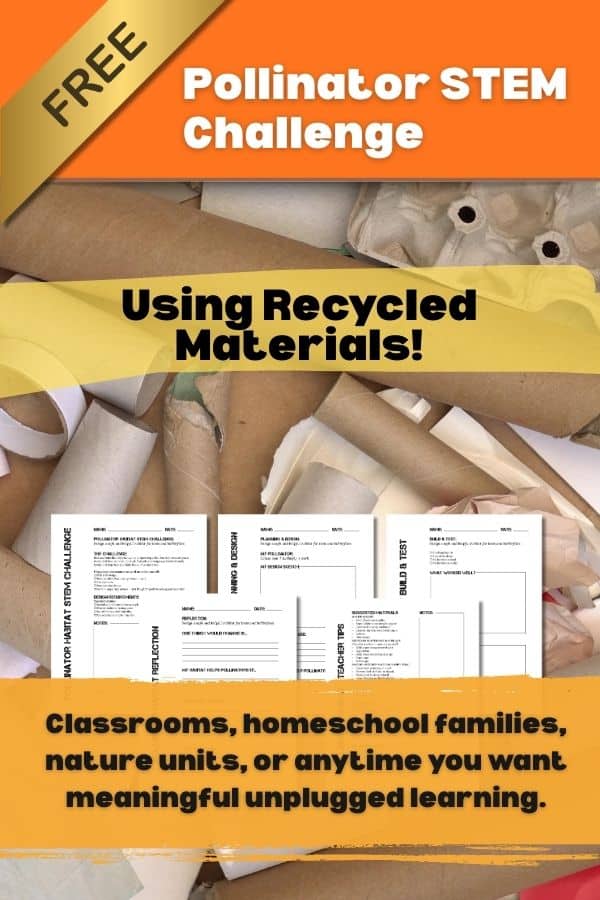
What’s Included in the Free Download
This printable STEM resource includes:
- A clear challenge introduction page
- A planning and design worksheet with space for sketching
- A build and test checklist for young engineers
- A reflection page to support science notebooks
- A detailed materials list and teacher tips
- NGSS alignment for easy lesson planning
Black-and-white design for low-cost printing.
👉 Download the FREE Pollinator Habitat STEM Challenge here!
Teacher-Friendly & Low Prep
One of the best things about this pollinator STEM challenge is how easy it is to implement. Students design their habitats using drawings, models, or a combination of both. No special materials are required.
Suggested materials include:
- Paper, cardboard, crayons, glue, and tape
- Optional- recycled items like paper towel tubes or egg cartons
- Optional- nature-inspired materials like leaves or flowers
This makes it ideal for:
- STEM centers
- Earth Day lessons
- Spring science units
- Early finishers
- Sub plans
Why Teach Students About Pollinators?

Learning about pollinators helps students understand:
- How plants and animals depend on each other
- Why biodiversity matters
- How humans can help protect ecosystems
Pair this lesson with a nature walk, pollinator journal page, or read-aloud. It extends learning and makes the experience more meaningful.
Grab the Free Pollinator STEM Challenge
Looking for a hands-on, nature-based STEM activity that students will love? This free pollinator habitat challenge is ready to use in your classroom.
👉 Download the FREE Pollinator Habitat STEM Challenge here!
I hope this resource helps your students build empathy for nature while practicing real-world STEM skills!
Frequently Asked Questions (FAQ)
(K–3). Adapt for older students by increasing the complexity of the design expectations or adding reflection prompts.
Students are given the real-world problem of designing a safe and helpful habitat for bees and butterflies. Students plan, sketch, build, and test their pollinator safe space.
No! This challenge uses common classroom and recycled materials. Paper, cardboard, crayons, glue, tape, and optional nature items like leaves or flowers. No specialized supplies required.
The printable pack includes:
A challenge introduction page
Planning and design worksheet
Build and test checklist
Reflection page
Materials list and teacher tips
NGSS alignment notes
Plus a printable format that’s easy to copy or use in student science notebooks.
This challenge encourages students to think like engineers, apply problem-solving skills, and reflect on design iterations — all foundational elements of STEM learning. It includes suggested NGSS alignment to support lesson planning.
Absolutely. The printable worksheets and challenge directions can be sent home with students or shared digitally. Students can build habitats at home using household materials and submit photos or reflections online.
This challenge is flexible. You can run it in a single session (45–60 minutes) or spread it over several days.
Yes! This project is parent-friendly, low-prep, and screen-free — making it a great choice for winter break activities or at-home STEM learning.
Pair the challenge with a nature walk, a pollinator journal page, related books on bees and butterflies, or a research project on local ecosystems to deepen environmental awareness.
I’d Love to Hear From You!
Did you use this activity? Let me know how it goes! Or better yet, tag me in your social media post @creativebrainsgrowhere!
Your feedback helps me create more tools to support your learners!
Thank you, and have a fantastic week!

-J
@creativebrainsgrowhere
❤️This resource has been donated to educators by CreativeBrainsGrowHere.org on social media @CreativeBrainsGrowHere ❤️


Leave a Reply