Hi again! Sometimes the simplest solutions can make a huge difference!
Looking for an easy way to get kids talking, laughing, and connecting—without a lot of prep?
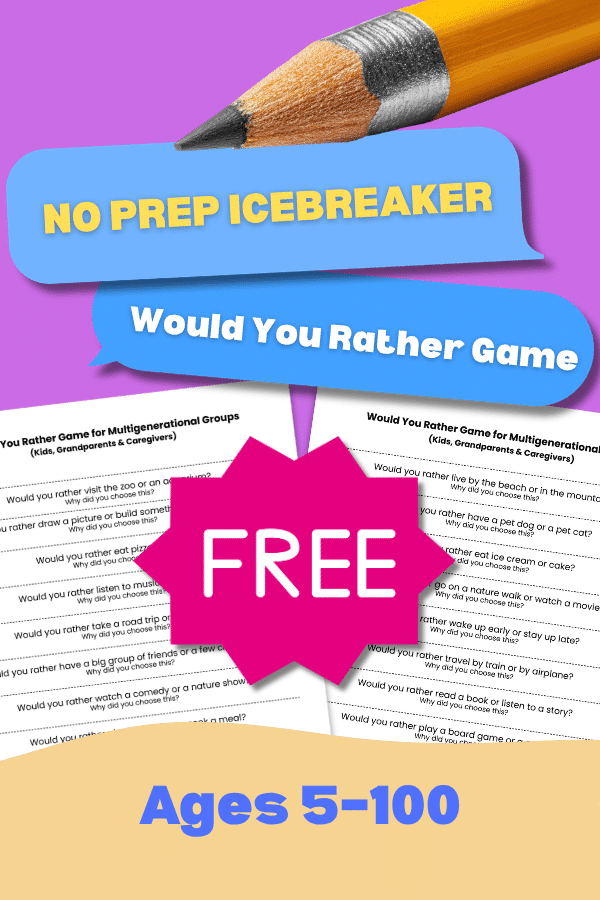
This Would You Rather? Printable is one of those go-to activities that just works. Whether you’re in a classroom, running a summer camp, spending time with grandparents, or leading a small group, it’s a simple way to spark conversation across ages.
And the best part? It’s completely free and ready to print.
Why This Activity Works So Well
Sometimes the hardest part of any group activity is just getting started. Kids can feel shy, older adults may be unsure how to jump in, and suddenly the room feels quiet.
That’s where “Would You Rather” comes in.
These questions are:
- Easy to understand
- Fun and low-pressure
- Designed to get everyone talking
Even better, they naturally lead to storytelling and shared experiences—which is where the real connection happens.
Perfect for Multigenerational Groups
This activity was designed with mixed-age groups in mind.
It works beautifully for:
- Summer camps and day programs
- Daycare and after-school care
- Senior centers and assisted living activities
- School counseling groups
- Family gatherings and holidays
- Homeschool and community programs
Kids love giving their opinions, and seniors often enjoy sharing the why behind their answers—creating those meaningful back-and-forth moments that make activities memorable.
What’s Included in the Free Printable
This free resource includes:
- 20 “Would You Rather” questions
- A clean, large-print format (easy for all ages to read)
- A built-in prompt: “Why did you choose this?”
That one extra question turns a simple game into a conversation-building activity.

Easy Ways to Use It
You can keep it super simple or build it into your day:
Whole Group Icebreaker
Read a question aloud and have everyone raise hands or share answers.
Partner Activity
Pair a child with an older participant, and let them discuss a few questions together.
Small Group Rotations
Use the questions as discussion starters at different stations.
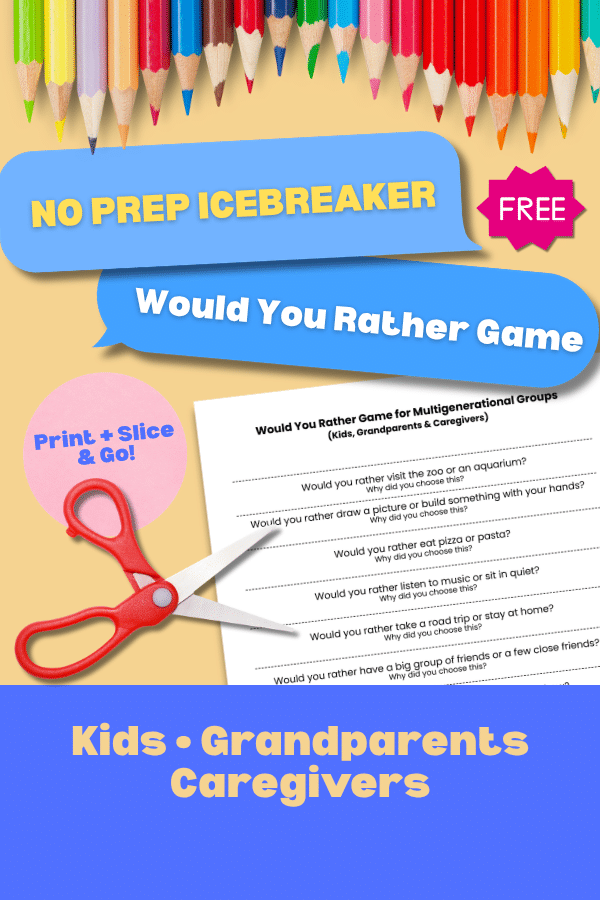
Cut Into Cards
Turn them into grab-and-go conversation cards for centers or downtime.
How I use it: I slice up the prompts with the handy cutlines and fold them up into squares. Then I draw simple hearts, suns, stars, smiley faces, etc., on the outside of the folded strips. When someone comes into my office for support, conflict resolution, or just a conversation that needs real honesty, I ask the visitor to pick a prompt from a bowl on my desk and read it out loud. The whole atmosphere changes to a conversation 🙂
A Simple Way to Build Connection
In a world where different age groups don’t always get the chance to interact, activities like this matter more than we realize.
They help kids:
Grab Your Free Printable
If you’re looking for a no-prep, feel-good activity that works across ages, this is a great one to keep on hand.
👉 Download your free Would You Rather? Multigenerational Game and try it with your group this week!
Want More Like This?
At Creative Brains Grow Here, you’ll find nature-based, hands-on, and SEL-friendly activities designed for kids, families, and educators—with options that work beautifully for camps, daycare programs, and community groups.
Quick Ideas to Keep the Conversation Going
After each question, try asking:
- What made you choose that?
- Would your answer have been different when you were younger / will be older?
- Do you think most people would agree with you?
These little follow-ups turn a quick activity into a meaningful conversation experience.
I’d Love to Hear From You!
If you use this activity, I’d love to know how it goes in your classroom or at home! Feel free to tag me on social media @creativebrainsgrowhere — I love seeing how learners explore science through hands-on creativity!
As an educator, author, and illustrator, your reviews and feedback help me continue creating meaningful, kid-friendly resources that support curious minds.

Thank you, and have a fantastic week!
— Julianne (J)
creativebrainsgrowhere.org
@creativebrainsgrowhere
❤️This resource has been donated to educators by CreativeBrainsGrowHere.org
Follow on social media @CreativeBrainsGrowHere ❤️
FAQ: Would You Rather Questions for Kids and Seniors
Good would you rather questions for kids and seniors are simple, relatable, and easy to answer. Questions about food, nature, travel, and daily life work best because they help both age groups connect and share experiences. This type of multigenerational activity encourages conversation without pressure.
To use would you rather questions in a multigenerational group, read each question aloud and invite participants to share their answers and explain why. You can pair kids with seniors, use small group discussions, or rotate partners. This makes it a great icebreaker for camps, daycare, senior centers, and family gatherings.
Would you rather questions are great icebreakers for camps and daycare because they are quick, fun, and require no prep. They help kids feel comfortable, encourage participation, and create a relaxed environment where everyone can join in—making them ideal for the first day of camp or group activities.
Yes, seniors and young children can successfully do activities together when the activity is simple and conversation-based. Would you rather questions are a perfect example of a multigenerational activity because they allow both groups to participate equally, share stories, and build meaningful connections.
Easy conversation starters for senior centers and family visits include would you rather questions, favorite memories, hobbies, and simple preferences like food or travel. These types of questions help break the ice and encourage natural conversation between different age groups.
Yes, would you rather questions support social emotional learning (SEL) by helping children practice communication, listening, and perspective-taking. When participants explain their answers, they build empathy and understanding—especially in mixed-age groups.
The best icebreaker activities for mixed-age groups include would you rather questions, common ground challenges, simple games, and storytelling prompts. These activities work well because they allow participants of all ages to contribute and feel included.



Leave a Reply