How to Teach Alliteration can feel surprisingly tricky—especially when your students can spot it in a tongue twister but struggle to actually use it in their own writing.
You explain it.
You model it.
You give examples.
And yet… when it’s their turn, you get a lot of random repeated words that don’t quite work.
If that sounds familiar, you’re not alone. The good news? A few simple shifts in how you teach it can make a big difference.
A Simple Lesson Flow That Works
If you’re wondering how to structure your lesson from start to finish, keeping it simple really does make a difference.
A clear, step-by-step flow helps students move from understanding alliteration to actually using it in their own writing.
Here’s an example of how you might structure your lesson:
- Start with a quick introduction and examples
- Guide students through identifying alliteration together
- Choose a topic and brainstorm matching words
- Support students as they write their own sentences or poems
- Allow time for sharing, feedback, and revision
Having this kind of structure in place keeps the lesson focused and helps students feel more confident at each stage.

When “Just Explain It” Isn’t Enough
I used to introduce alliteration with a definition and a few fun examples, thinking that would be enough. Students would nod along… but when it came time to write, it just didn’t transfer.
What I’ve found works much better is slowing things down and giving students a clear structure to follow—before expecting them to create their own.

Start With Sound, Not Spelling
One of the biggest game changers is focusing on sound instead of letters.
Students often think alliteration means “same letter,” which leads to confusion. Instead, try:
- Saying words aloud and asking: Do these sound the same at the start?
- Comparing examples like:
- Big brown bear (works)
- City cat (same letter, different sound)
This helps build a stronger foundation before writing even begins.
Build It Together First
Before asking students to write independently, model the process step-by-step.
Try this simple routine:
- Choose a topic together (e.g. animals, weather, food)
- Pick a starting sound
- Brainstorm a list of matching words as a class
- Combine them into a sentence
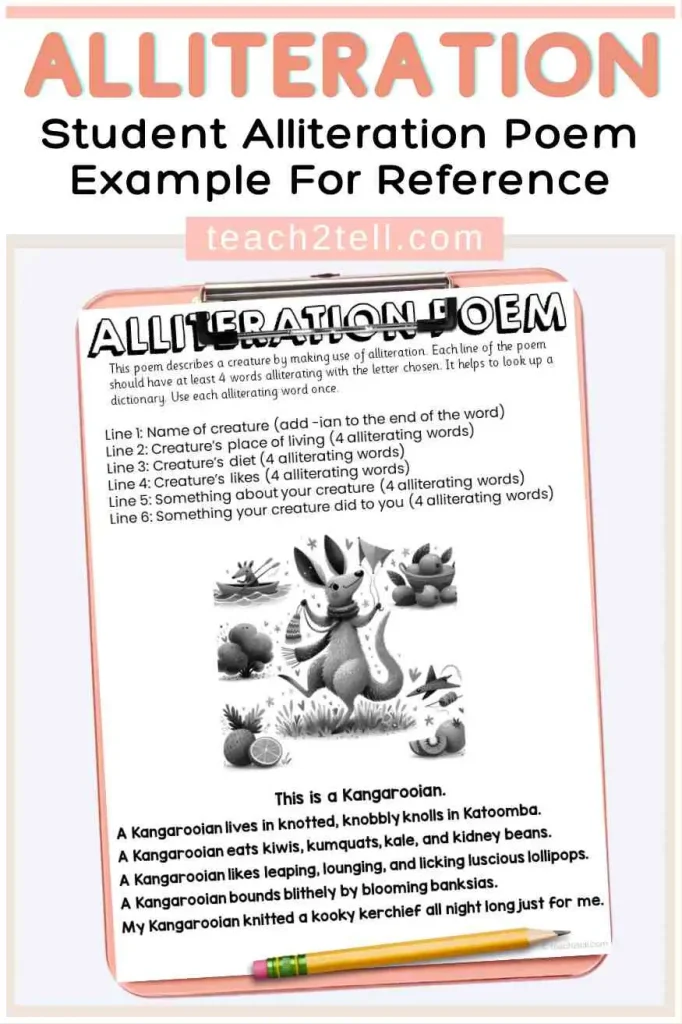
For example:
- Sound: S
- Words: silly, slippery, snake
- Sentence: The silly, slippery snake slithered silently.
This shared practice removes the pressure and shows students exactly what success looks like.
Use Word Banks to Support Success
Coming up with words on the spot can be the hardest part for students.
Instead of expecting them to generate everything independently, provide support like:
- Pre-made word lists by letter or sound
- Anchor charts with examples
- Small group brainstorming before writing
This helps students focus on using alliteration, rather than getting stuck on what to write.
Turn It Into a Creative Challenge
Once students understand the structure, you can make it more engaging by adding a creative twist.
Try:
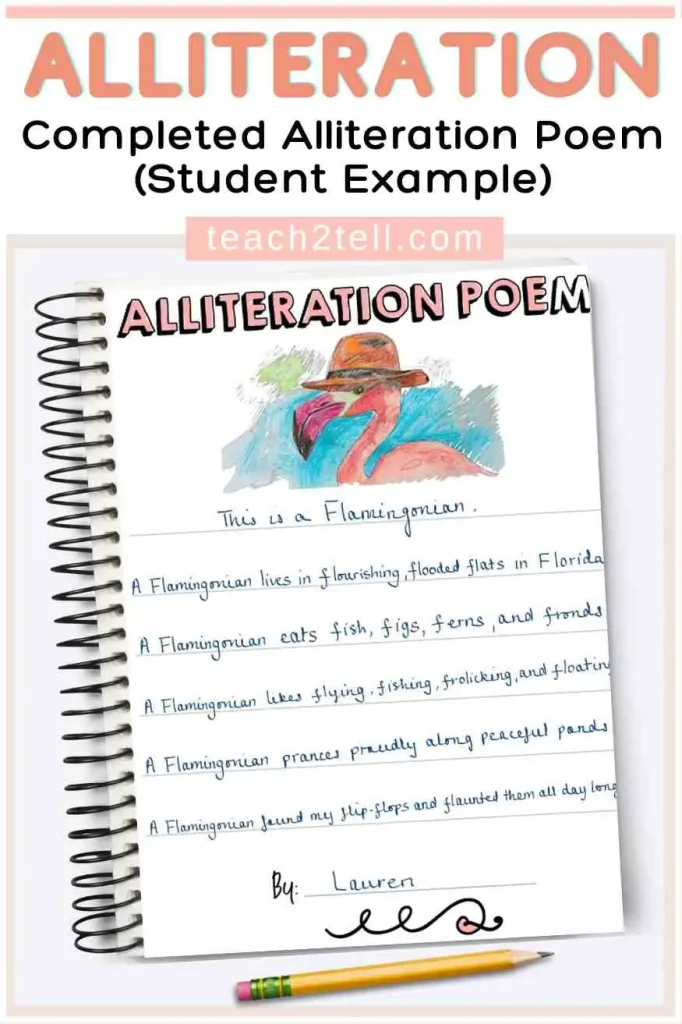
- Writing funny or exaggerated sentences
- Creating alliterative character names (e.g. Daring Danny, Curious Chloe)
- Letting students illustrate their sentences
This is where you’ll start to see confidence build—and students actually enjoying the process.
Keep Practice Short and Consistent
Alliteration doesn’t need a long, drawn-out lesson.
In fact, it works best when it’s revisited in small, regular doses:
- A quick warm-up sentence
- A literacy center activity
- A short writing task
These small moments of practice help reinforce the concept without overwhelming your students.

Keeping It Manageable
If there’s one thing to remember, it’s this: teaching alliteration doesn’t need to be complicated.
Focus on:
- Sound first
- Guided practice
- Simple structures
Once those are in place, everything else starts to fall into place more naturally.
How to Assess Alliteration Writing (Without Overcomplicating It)
Once students start writing their own alliteration, assessment doesn’t need to be complicated.
Instead of focusing on perfection, it helps to look for a few key elements that show understanding.
- Are students using the same beginning sound (not just the same letter)?
- Does their writing stay focused on a clear topic?
- Are they attempting creativity with word choice?
- Is their work structured and easy to follow?
A simple checklist or rubric like this makes it much easier to give clear, consistent feedback—without adding extra workload.

Make It Even Easier
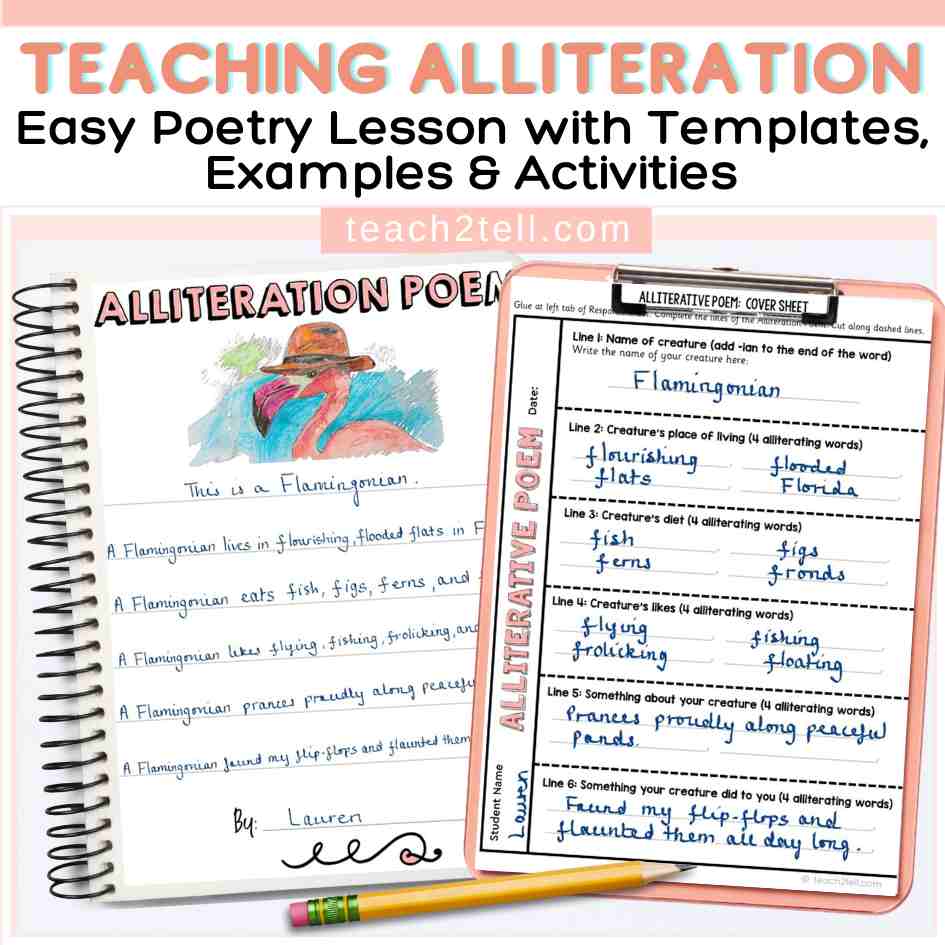
If you’re short on time, having ready-to-go templates, lesson structure, and assessment tools can make all of this much easier to implement in your classroom.
And if you’d like to make this even easier, click here to grab the free alliteration writing kit.
This post on “How to Teach Alliteration: Classroom Strategies That Actually Work” was originally shared on TEACH2TELL.COM and has been adapted for Classroom Freebies readers.
Frequently Asked Questions
What is alliteration in simple terms?
Alliteration is when words in a sentence start with the same sound. For example, “busy bees buzzed” uses the same beginning sound to create a fun and memorable phrase.
Why is alliteration important for students?
Alliteration helps students develop phonemic awareness, which is essential for reading and spelling. It also makes writing more engaging and helps students play with language in a creative way.
At what age should students learn alliteration?
Alliteration can be introduced as early as Kindergarten or Grade 1 through songs and oral language activities. By Grades 2–4, students can begin using it in their own writing.
Why do students struggle with alliteration?
Many students focus on matching letters instead of sounds. Teaching them to listen for beginning sounds rather than just looking at spelling can make a big difference.
How can I make alliteration easier for my students?
Start with oral practice, model examples together, and provide word banks. Breaking the process into small steps helps students build confidence before writing independently.
What are some quick alliteration activities?
You can try tongue twisters, daily warm-up sentences, alliterative name activities, or quick writing prompts using a chosen sound. These short activities keep practice fun and manageable.
How do I support struggling writers with alliteration?
Provide sentence starters, visual word banks, and allow students to work in pairs or small groups. This reduces pressure and helps them focus on the skill rather than generating ideas from scratch.
Can alliteration be used beyond poetry?
Yes, alliteration can be used in narrative writing, descriptions, and even opinion writing. It adds rhythm and makes writing more engaging across different genres.



Leave a Reply