Hi again!
I have to say, this is one of my favorite activities – it combines science with calming live jellyfish cams and can be paired with SEL, art, poetry, writing and more. Plus, its a great way ro regain control and indoor voices will having a nice soothing break in a virtual aquarium 🙂
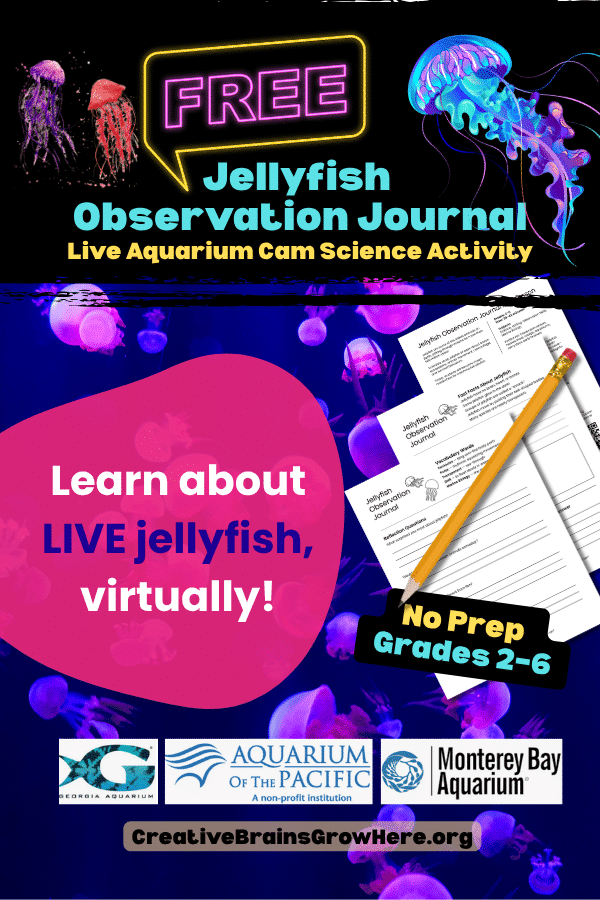
DETAILS
Grades: 2–6
Time: 20–45 minutes
Subjects: Science, Writing, Observation Skills, Marine Biology
Perfect For: Classroom centers, homeschool, camps, aquariums, rainy days, early finishers, and calm down moments.
LEARNING GOAL
Students will observe live jellyfish behavior using aquarium webcams and record scientific observations like real marine biologists.
MATERIALS
- Optional: headphones
- Internet access
- Printable observation sheets
- Pencil or colored pencils
- Timer or clock
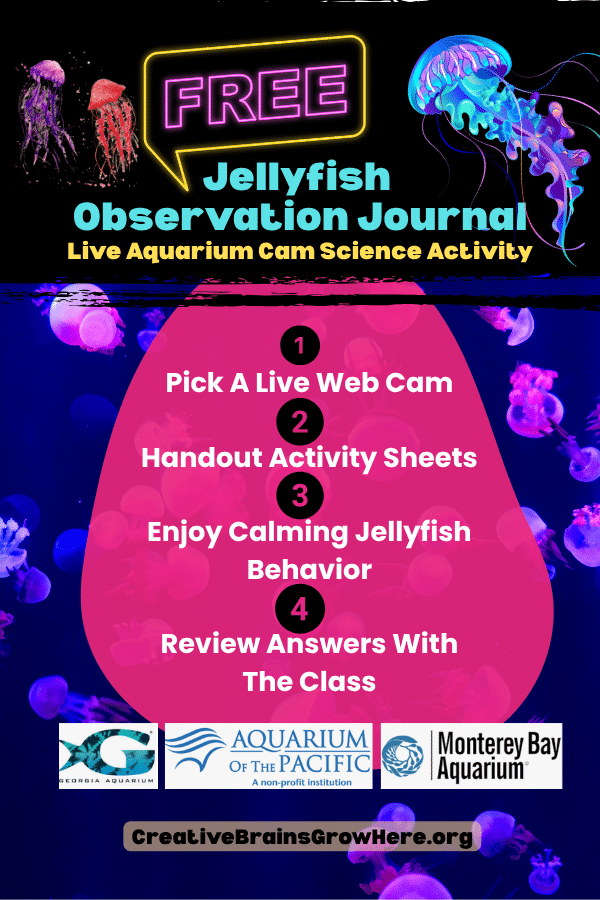
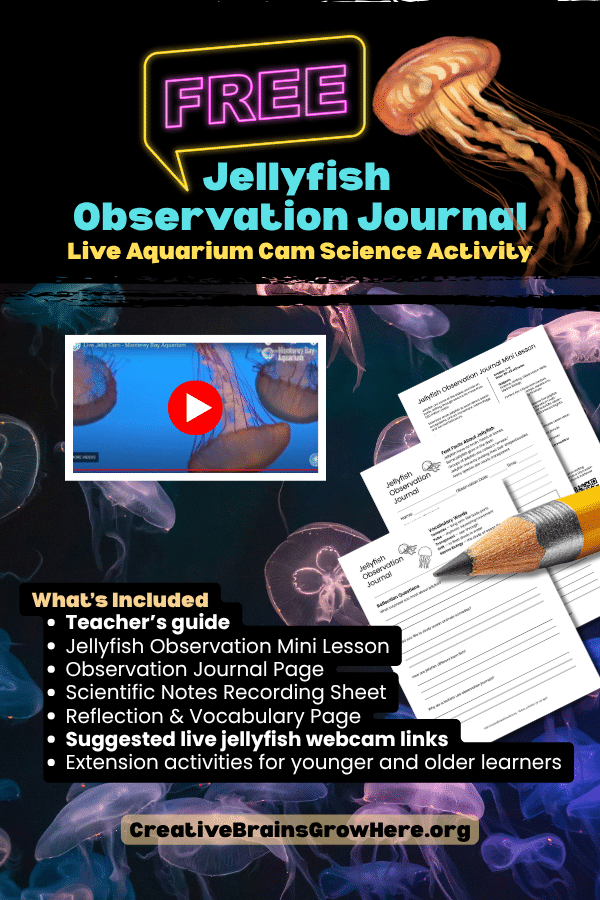
In the handout is a teacher’s guide page with the cam links, ideas for extension activities, and general activity info that makes it a perfect handoff to a sub or to use as a backup activity when the class schedule goes sideways 🙂
Pro tip- the first link listed has a 24 hour cam that plays nonstop with recorded footage after aquarium hours. This makes it a great backup to traditional live cams that sometimes aren’t working, or arent pointing to something interesting.
NGSS
- 2-LS4-1
- 3-LS4-3
- 4-LS1-1
- MS-LS1-4
CCSS ELA
RI.2–5.1 Observation & Evidence
W.2–5.2 Informative Writing
SL.2–5.1 Collaborative Discussion
Make it a jellyfish party by turning out the lights during observation time so students can really see the fascinating colors on screen. Extension idea – break out the day-glow paint and have the students create “bioluminescent” jellies to take home.
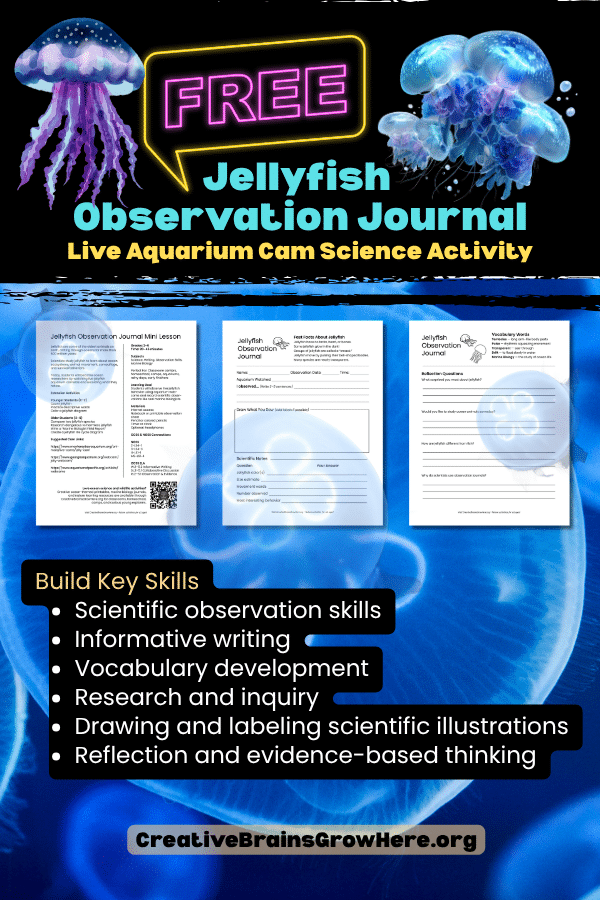
Skills
Kids practice:
- Creativity and critical thinking
- Scientific observation
- Descriptive writing
- Marine biology vocabulary
- Focus and attention to detail
- Drawing and labeling
- STEM inquiry skills

This indoor science activity is flexible for classrooms, homeschool groups, camps, libraries, aquariums, afterschool programs, and daycare enrichment because it is adaptable for multiple ages and learning levels.
Jellyfish are fascinating ocean animals that help students learn about marine ecosystems, animal movement, camouflage, bioluminescence, adaptation, and scientific observation. Their unique shapes and movements also make them excellent subjects for science-based art activities.
Why Teachers & Parents Love It
- No prep
- Encourages real scientific thinking
- Combines science + writing + art
- Flexible for multiple grade levels
- Uses engaging live aquarium webcams
- Supports independent learning
- Great for mixed-age groups
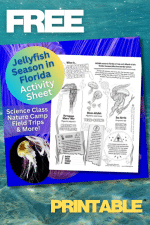
Whether you are teaching about ocean ecosystems, marine animals, or scientific observation skills, this printable jellyfish journal activity helps students connect with real-world science in a creative and memorable way. Get the printable handouts here!
I’d Love to Hear From You!
If you use this activity, I’d love to know how it goes in your classroom or at home! Feel free to tag me on social media @creativebrainsgrowhere — I love seeing how learners explore science through hands-on creativity!
As an educator, author, and illustrator, your reviews and feedback help me continue creating meaningful, kid-friendly resources that support curious minds.
Thank you, and have a fantastic week!
— Julianne (J)

creativebrainsgrowhere.org
@creativebrainsgrowhere
❤️This resource has been donated to educators by CreativeBrainsGrowHere.org
Follow on social media @CreativeBrainsGrowHere ❤️
FAQ
This educational printable is designed for elementary-aged learners, typically best for kids in grades 2–6. The activities can often be adapted for younger children with assistance or expanded for older students with additional research and creative projects.
Yes! Like many resources from Creative Brains Grow Here, this activity is designed to support both Common Core State Standards (CCSS) and Next Generation Science Standards (NGSS) through reading comprehension, critical thinking, observation, writing, and hands-on learning.
Absolutely. This printable works well for homeschool families looking for low-prep educational activities that combine science, creativity, literacy, and interactive learning. It can be used as a mini-unit study, enrichment activity, or independent practice.
Yes. Teachers, homeschool groups, camps, daycare centers, nature programs, and after-school programs frequently use these printable activities because they are flexible, easy to prepare, and engaging for mixed-age groups.
Most Creative Brains Grow Here activities are designed to be simple and accessible using common classroom or household supplies such as crayons, pencils, scissors, glue, or basic craft materials. Specific supply lists are included when needed.
Yes. This printable is ideal for indoor learning days, rainy weather activities, quiet time, travel learning, substitute teacher plans, and screen-free educational fun at home or in the classroom.
Yes. Many activities are intentionally flexible so younger children can enjoy coloring, matching, and simple observation tasks while older learners complete writing prompts, research extensions, STEM connections, or critical thinking activities.


Leave a Reply